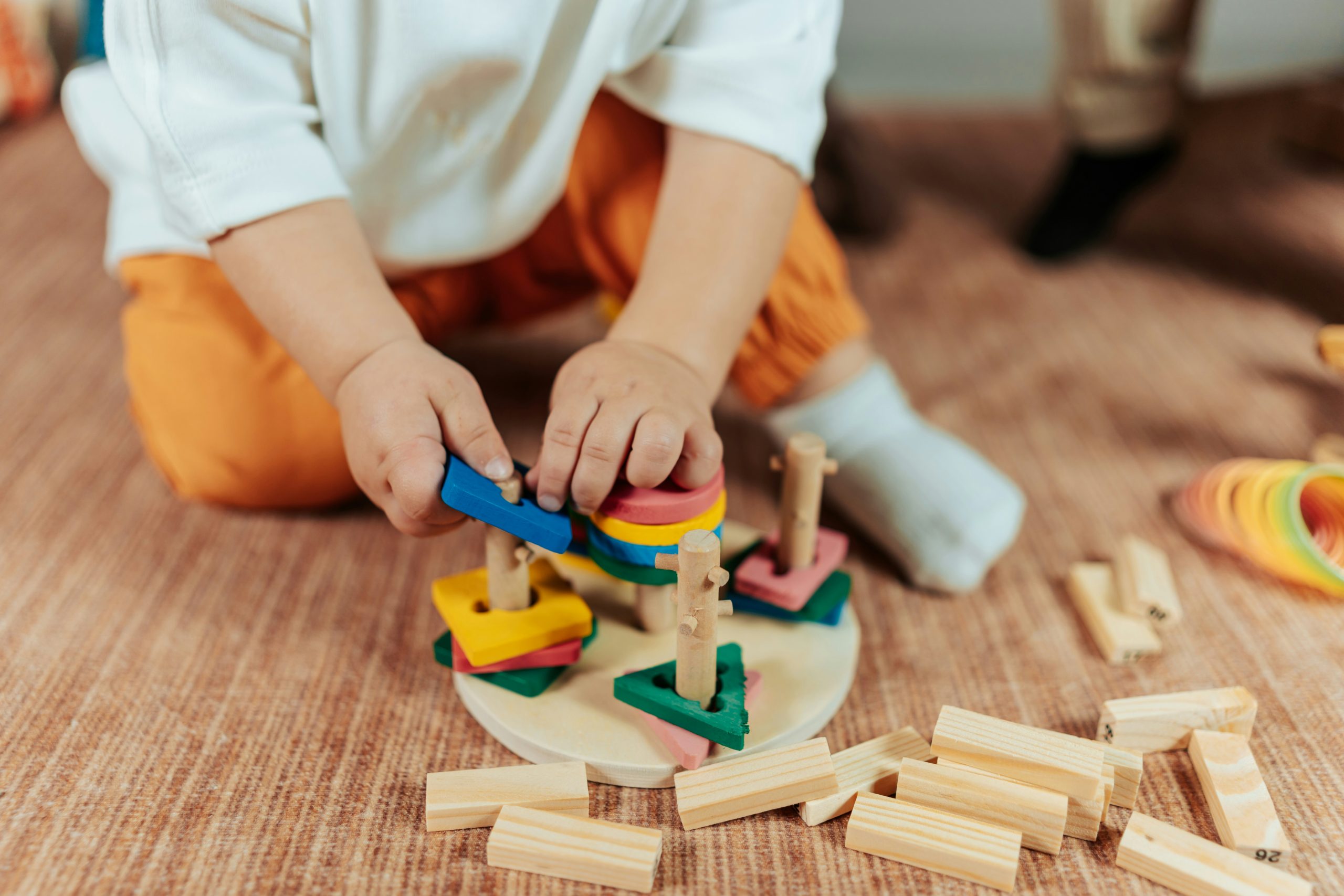
We are almost finished the first month of school. This year, I’m thrilled to be in a different role, as a teacher in a self-contained class for students with developmental disabilities. There has been a lot of new learning for me in this role, but recently I realized what a huge impact Self-Reg has as part of this learning.
It Started With A Comment
I was in the class during lunchtime, and one of the EAs (Educational Assistants) in the room, made a comment to me: “It’s so calm in here.” She was right. It did feel calm. Everyone was sitting to eat. There were some quiet conversations coupled with a little laughter, some smiles, and a bit of babbling. The combination of everything just felt right. This made me think about Self-Reg, co-regulation, and why we support both in the classroom.
What Does Self-Reg Look Like?
Since all of the students in the class are new to the school, we’ve really had to get to know them and connect with their families to find out what helps them feel calm.
Sensory Play
Sensory play works well for many students. The sensory choices might vary though. For some, water is a good option, as it is also safe for kids to swallow. For others, painting, gluing, sand, or play-doh work well. LEGO and taping are different kinds of sensory options, but they are also ones that many children choose. Some students might select different choices at different times.
Having different options readily available, also helps with easy access for kids when needed. It’s interesting to stand back and watch students move from a sensory option to another learning space. Today, a different EA was in the room with us, and she observed this in action. It was interesting to hear her perspective, as she noticed how a child selected a sensory option, played with it for a bit, and then moved back to what he was doing before. I loved her comment, as she said, “He got what he needed to feel calm, and then went back to what he was doing before.” She saw the Self-Reg in action.
Gross motor play
Gross motor play works well for some students. Having different small areas in the room, allows for different play/exploration. Even picking up and moving the sofa cushions in this one area, provides the gross motor play that some students need.
Music
Music calms all of our students. We have found that having some quiet nursery rhymes/songs on in the background, makes a big difference for kids. One child, even selects his own songs on an independent device to meet his needs. Sometimes, having an iPad quietly playing off in the corner, can make a difference. I would have thought that this amount of music would dysregulate our kids, but having this hum of song, creates the most wonderful feeling in the room.
Exploring Books
Using the books in different ways. While our students are just beginning to read, they love books, especially ones that align with some favourite songs or feature some favourite characters. In fact, a few students have taken to bringing out all of our bookshelf books at recess time each day. They started by carrying them out, and now I’ve brought in a bag for them to use. Maybe part of the calm comes from the heavy lifting of the bag outside, but it brings my previous Reading Specialist heart some joy to see kids eager to read.
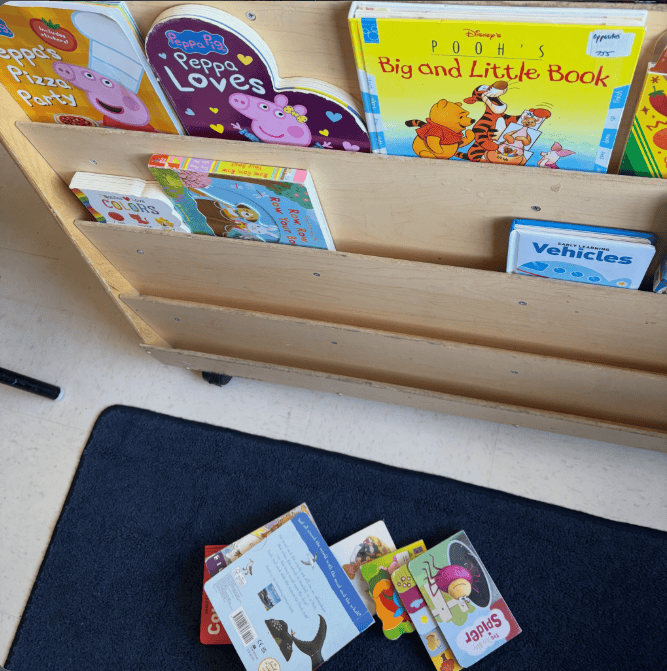
These books will all be going outside.
It’s interesting to view student choices each day through the lens of Self-Reg. Seeing the calm after, helps me better understand the intentional choices that each child makes.
What About Co-Regulation?
Some students rely on us to help them select calming choices. I love that all of the adults in the room can work together to do this, and as we get to know students more — with the help of families — we also realize what choices might work at the time. The hope is that students will slowly start to self-select calming options. I wonder if naming the “calm” that we’re seeing will help students with these choices.
There Will Always Be Something New
Yesterday, as we were reflecting as a team on this feeling of “calm,” we realized that what works now might not always work — or might not always work for every child. There will need to be tweaks, and we will need to reflect again. I love though that our focus is on Self-Reg, for as we know, students need to be calm in order to learn. What are some of your Self-Reg reflections during the first month of school? As we all get to know our students more, it’s interesting to view behaviour through this important Self-Reg lens.