
Blog by Hannah Chloe P. Donovan, a Self-Reg in Early Childhood Development Certificate Program Alumni
Have you ever watched a live orchestra?
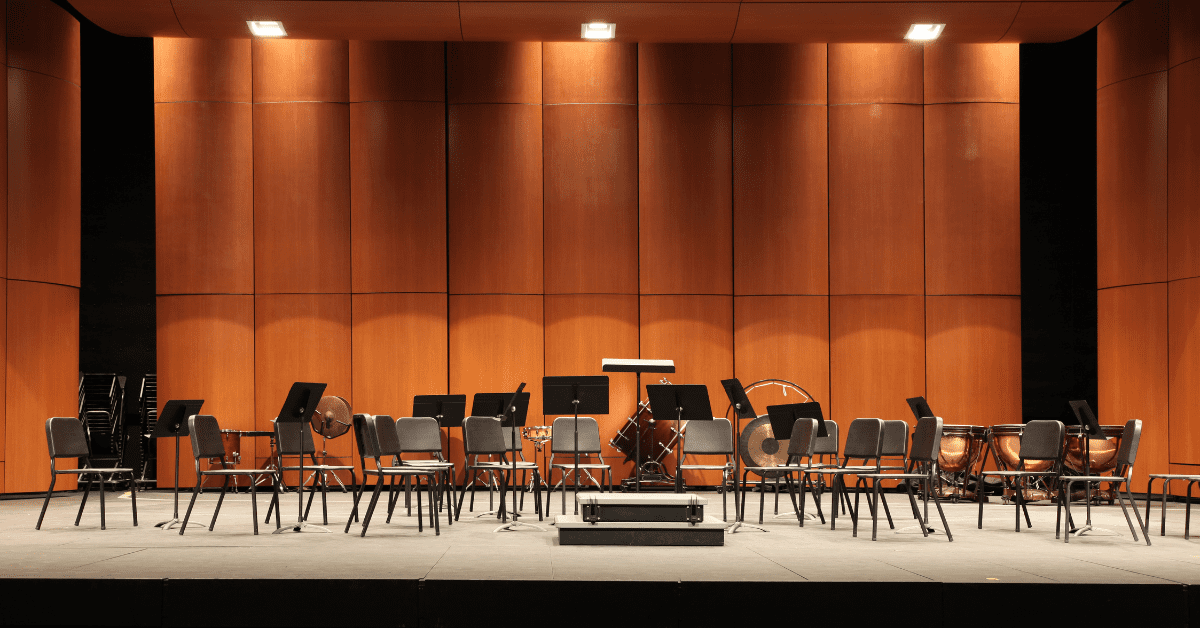
I recently attended a film with a live orchestra performance. I watched, amazed by the intricate interplay between different instruments and how they come together to create a beautiful symphony, a unified experience that complements the movie that’s being played on the screen. This teamwork reminded me of self-regulation, a powerful tool for creating harmony within ourselves and fostering well-being in children.

Imagine the Red Brain as our energetic conductor, full of passion but prone to strong emotions. The Blue Brain is the calming counterpoint, focusing on logic and reason. Just like the orchestra needs balance between the instruments, we need balance.
This is where I find using “Belly Breathing” helpful. When I take slow, deep breaths, it activates the calming Blue Brain, just like a conductor quieting the orchestra. Try it yourself – breathe in slowly through your nose for a count of four, hold for a count of two, then breathe out slowly through your mouth for a count of six. Do you feel the tension ease and your mind become clearer?
The Self-Reg Symphony:
Imagine our brains as the conductor of an orchestra. To create beautiful music, the orchestra needs several key elements:
- The Foundation (Attachment Styles): Just like the musical foundation, our attachment styles influence how we trust and express emotions. These styles are shaped by our early relationships and impact how we interact with the world.
- The Melodies (Temperament): Each instrument in an orchestra has its own unique melody. Similarly, our temperament reflects our inherent approach to the world. Some children might be energetic and lively (like a piccolo), while others might be more calm and easy-going (like a cello).
- The Composition (Personality): All the elements – attachment styles, temperament, and self-regulation skills – come together to create our unique personality. This “composition” is constantly evolving as we learn and grow.
By understanding these elements, we can become conductors of our own well-being. Imagine a child struggling with frustration – recognizing their temperament might help us adjust our approach. The beauty of Self-Reg is that it provides hope for us all. With practice, we can learn to harmonize our inner orchestra, fostering a more peaceful and fulfilling life for ourselves and the children around us. Remember, we are all conductors of our own well-being!
Learn more about the Triune Brain or explore the beauty of a balanced Self-Reg orchestra here.


5 Comments
Lovely post
Hannah this is beautiful- so happy to see your writing here for others to enjoy.
I agree! Hopefully this is something others can share too, so that even more can read it!
Aviva
Thank you all for your encouraging comments! I’m glad that my blogpost is able to resonate with so many more outside of the course =D
It sounds like it was definitely a great blog post for that, Hannah! Thanks for sharing this!
Aviva