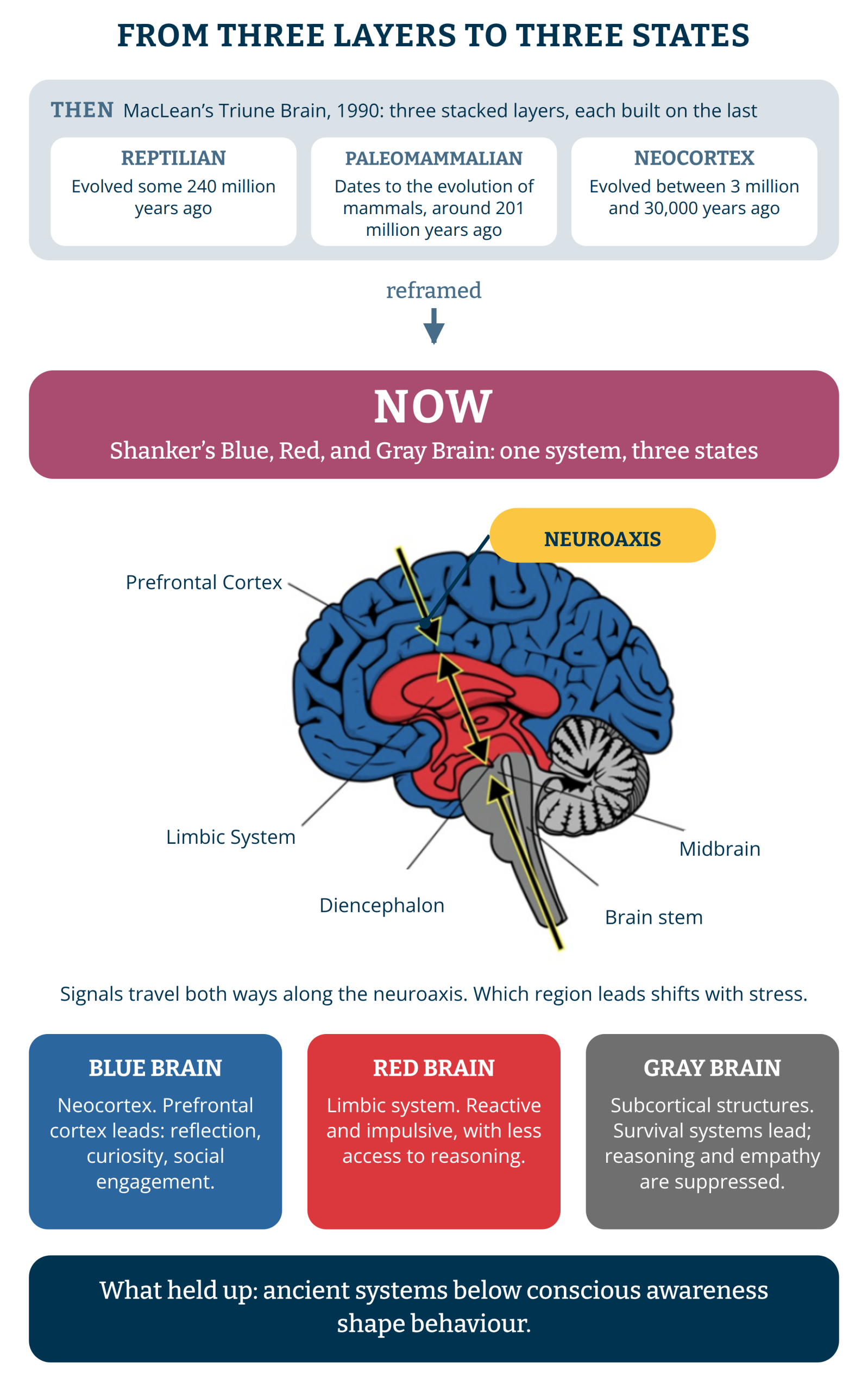
Dr. Stephen Porges, identified 4 neural mechanisms we have for dealing with stress, this is what the hierarchy of human stress responses consist of. This graphic illustrate the 3 we use most often.
- Social engagement: seeking and receiving social support, comfort and calming from others. This is our go-to response to stress in most situations.
- The fight or flight: when the sympathetic nervous system is triggered to mobilize our body to flee from danger or defend ourselves. This is the strategy we use in more extreme stress, when social engagement can’t do the job for us.
- Freeze: immobility in response to danger, for example; a possum playing dead, a guilty child refusing to answer a question. This is an involuntary response triggered by extreme danger or extreme pain.
(The fourth mechanism, disassociation only comes into play during extreme stress.)
For Self-Reg the key points are that social engagement is the strategy we want to use most often.
However it’s also important to be able to recognize the signs of fight-or-flight and freeze, and to understand that when people are in those states they feel too unsafe to engage in social engagement.

Learn more:
Self-Reg Foundations Certificate Program