

It was almost the end of the day, and I was just getting ready to head to one of my final classes. That’s when I saw two eyes peeking out from under a chair in the pod. Hold on a second. Who’s there? While I was running a few minutes late to my group, I thought that it would be worth the extra couple of minutes to check this out. I went to have a look.
The “Under The Chair” Discussion
As I got closer, I realized that I knew this student. We have a good relationship, so I asked, “What’s happening?” He said to me, “I’m taking a break under the chair. I’m mad!” This child then went on to explain what happened after recess which resulted in his toy being confiscated for the rest of the day by another educator. Was he in the wrong? Yes … but strangely enough this was not the point here. It’s what happened next that made me stop, think about Self-Reg, and respond a little differently.
His Wise Words
This child said to me, “I can’t be in the classroom right now. I’m mad! But this makes me feel better. It’s quiet under here. And Miss Dunsiger, the chair is like a tent. It pushes down on me a bit. It makes me feel tucked in.” Hold on a minute. There would be every reason to think that this child’s behaviour was misbehaviour, and I admit that I thought this at first, but now I have a new perspective. I think that this was stress behaviour, and he was taking the time to self-regulate. I tested my hypothesis with a question.
My Question
I said to this student, “I have to get going in a minute. I have a meeting in the office. I’m just wondering, ‘What do you think a teacher will say to you if they see you here?'” These were his words, “I don’t know, but it doesn’t matter to me. This makes me feel calm.” As you know, I cannot resist some Self-Reg in action. I said to him, “You’re self-regulating. That’s what you can tell anyone who might ask.” He nodded, smiled at me, and said, “I’m self-regulating. Thanks, Miss Dunsiger!” Self-regulation and new vocabulary words: my teacher heart is happy right now.
How Things Ended
It turns out that this student did not tell another educator that he was self-regulating, but he did talk through what happened with another teacher. He also returned to his classroom and had a successful end to the day. Then he nicely spoke to the educator who took his toy, worked out what he would do the next time, and calmly asked for his toy back (which she then gave to him). Coming back from a problem of this magnitude is a challenge for him, but I have to wonder if Self-Reg, our reactions to his behaviour, and time to reflect, communicate, and positively rejoin the classroom made a difference for him.
Yesterday was a win for this child and a good reminder to me about the importance of “soft eyes” and the impact that we can have on changing a trajectory. What are some of your stories of connections, Self-Reg, and success? Thanks to this Grade 2 student for helping me view behaviour a little differently!
Learn more about reading and reframing stress behaviour with our Self-Reg in Early Childhood Development certificate program. Our newest cohort starts soon!


4 Comments
connection is so key and such a wonderful moment you were able to give even when you had somewhere to be. I find this is so often the case when working with children- the time. The time to be able to support these moments. And what you so beautifully reminded us- is that a little time truly goes a long way 🙂
Thanks so much for your comment, Cassie! This course definitely reminded me about the value of relationships and slowing down. I find myself trying to make the time even when I might not always have it. I wonder if this is easier in my current role. Thoughts?
Aviva
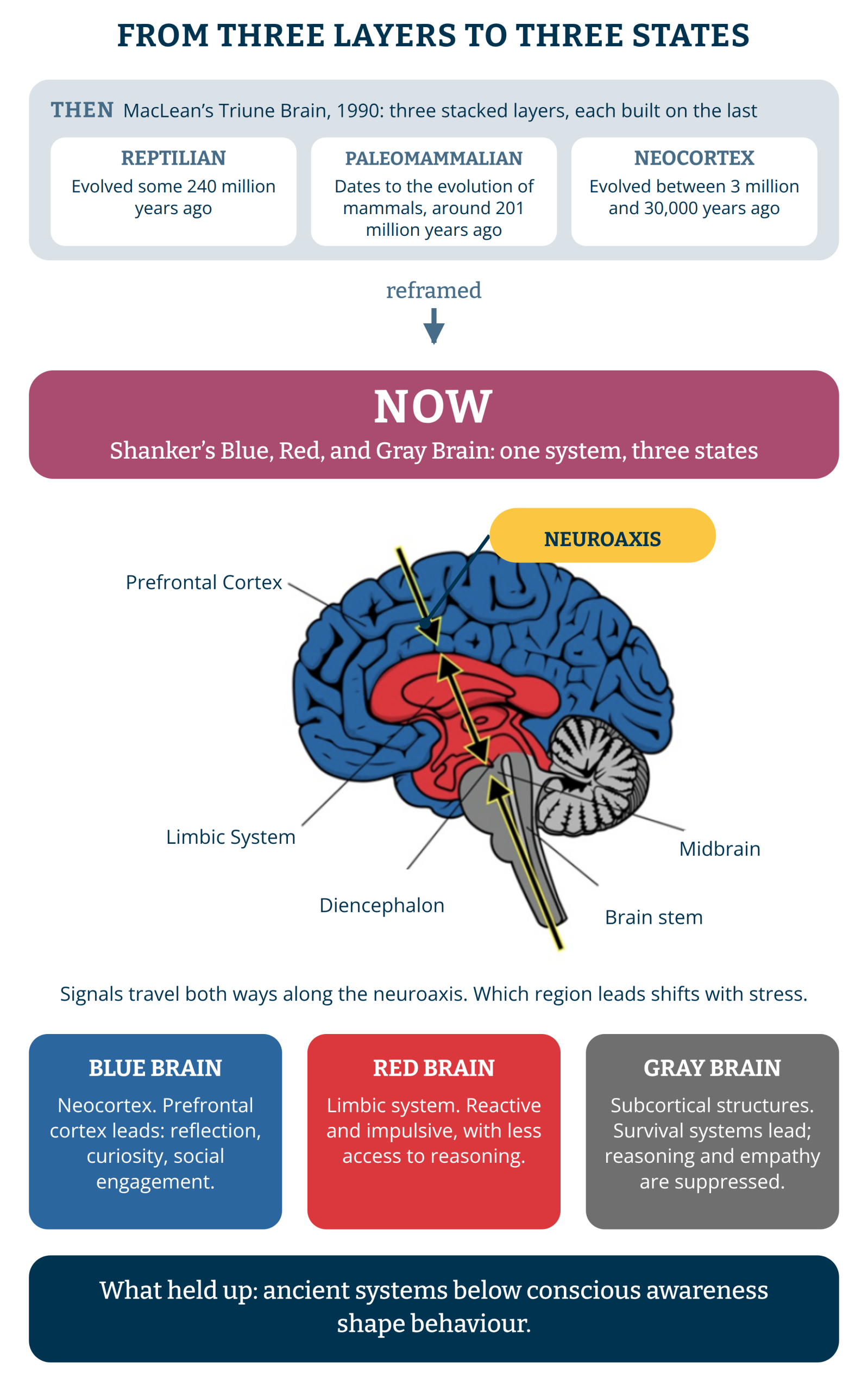
Thank you, Aviva, for your touching story, beautifully and poetically told! It is a testament to the power of relationship, of “being with”, of taking the time to slow down, wonder why? why now; of connecting by asking questions and then truly, deeply listening and reflecting on the answer you received in a way that created the dynamic open flow of the conversation. The way you engaged with him gave him a “felt sense”, deep in his gray brain survival systems, and in his heart, that someone was listening, someone understood his experience. . . and that helped dial down his stress response, allowing him to literally embody the gift of self-regulation you gave to him with your empathetic, attuned attention. You helped him find his inner capacities to make his way back to his classroom in a calmer, more engaged way to genuinely surmount the challenges of his day. A great example of Self-Reg in action!
Thanks so much for your kind words! I love when I can see the benefits of Self-Reg in action. I wonder if others also have stories of success. Sometimes I think we need to hear these kinds of stories to also inspire us to continue to view behaviour differently and respond in different ways. What do you think?
Aviva