By Adi Israeli— Self-Reg Foundations Certificate Program student and occupational therapist
In this reflection, Addie shares what surfaced for her while working through Foundations 2, a six-module course within the Foundations program. As an occupational therapist, she’s used to tracking stress in others. Here, she turns that lens inward and begins noticing how stressors across the five domains have shaped her own responses over time.
There were so many things that came up for me while working through the Foundations 2 course—about my children, about my clients—but this time I decided to focus on looking inward.
My senses have always been very alert: I can smell things others don’t notice, I struggle to ignore sounds that others quickly adapt to, my eyes get overwhelmed easily when there are many visual stimuli around, and when it comes to motion sensitivity, there isn’t a single boat I haven’t thrown up on.
As a child, I tended to avoid many things. I felt enormous pressure every time someone told me to try something new; I preferred what was familiar and comfortable. As I entered adolescence, I started saying I wasn’t interested (in the things that actually intimidated me), that I simply didn’t feel like it. It became part of how I defined myself.
Fortunately, my parents accepted me as I was and didn’t make a big deal out of it. If we went to a concert and I asked to go home, after a bit of convincing, we would leave. My father always looked for solutions that would help me feel better: on car rides I always had lemon and music, and he made sure I had a place to lie down.
However, whenever someone else tried to convince me and put pressure on me, my reaction became intense. I was either on the verge of tears or I became irritated. I always thought it was ridiculous that this happened to me. “Why are you crying?” I would scold myself internally, knowing that others saw it as a weakness, as if I were being spoiled.
I’m an occupational therapist, and I always knew I had sensory sensitivity; I recognized the stressor.
But I didn’t know to look at it as a stressor. I didn’t give it any significance beyond the thing itself.
Now, when I look back at those childhood moments where pressure was put on me, I understand how situations that were already challenging for me sensory-wise turned into overload once social stress was added on top of them. In those moments, my system simply shut down.
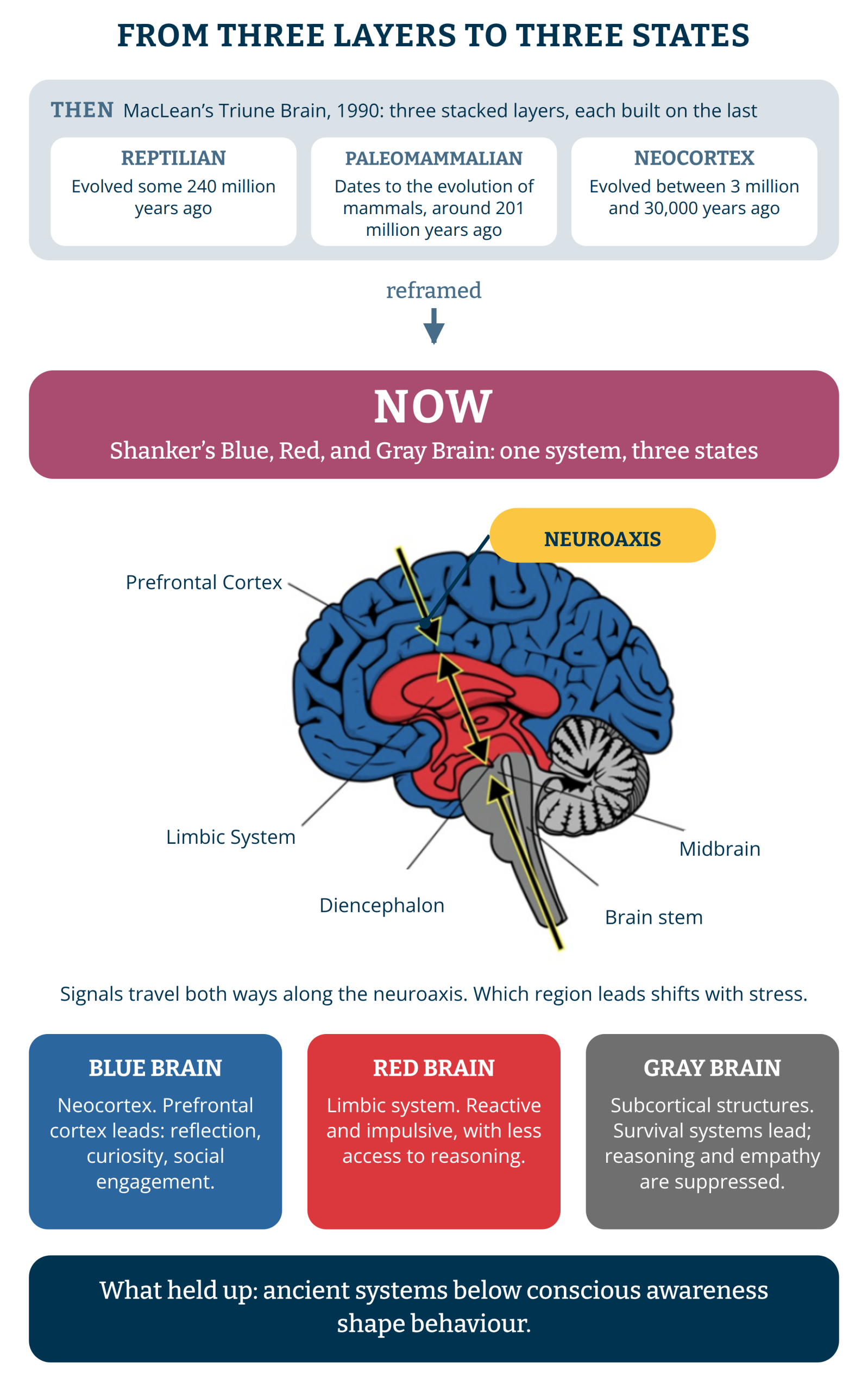
Today I understand that all those attempts to “bring some logic into the situation” didn’t help, because the part of the brain responsible for logic simply wasn’t accessible. I needed first to reduce the stress.