That time is upon us once again! As we gear up for another school year, we know that the journey back to school isn’t just for students. Teachers, leaders, support staff, education assistants (EAs) and even bus drivers all play crucial roles. Susan Hopkins created this series of insightful videos highlighting six key roles within the education system, along with six signs that show practitioners in each role are practicing Self-Reg and helping make Back to School a success.
When the whole school team embraces Self-Reg, classrooms and hallways become spaces where relationships, collaboration, and care are front and center. It’s not about striving for perfection—stressful moments will always happen—but in a Self-Reg school those moments become opportunities for reflection and recovery. Adults model what it means to recognize stress, regulate, and respond with compassion—for students, colleagues, and themselves. That’s what allows every child, and every adult, to truly thrive. To see how this plays out across the different roles in a school, read and watch Susan’s first video in the series on Teachers below, and check back every week for 2 more new roles posted in our Self-Reg Blogs.
What Does It Mean to Be a Self-Reg Teacher?
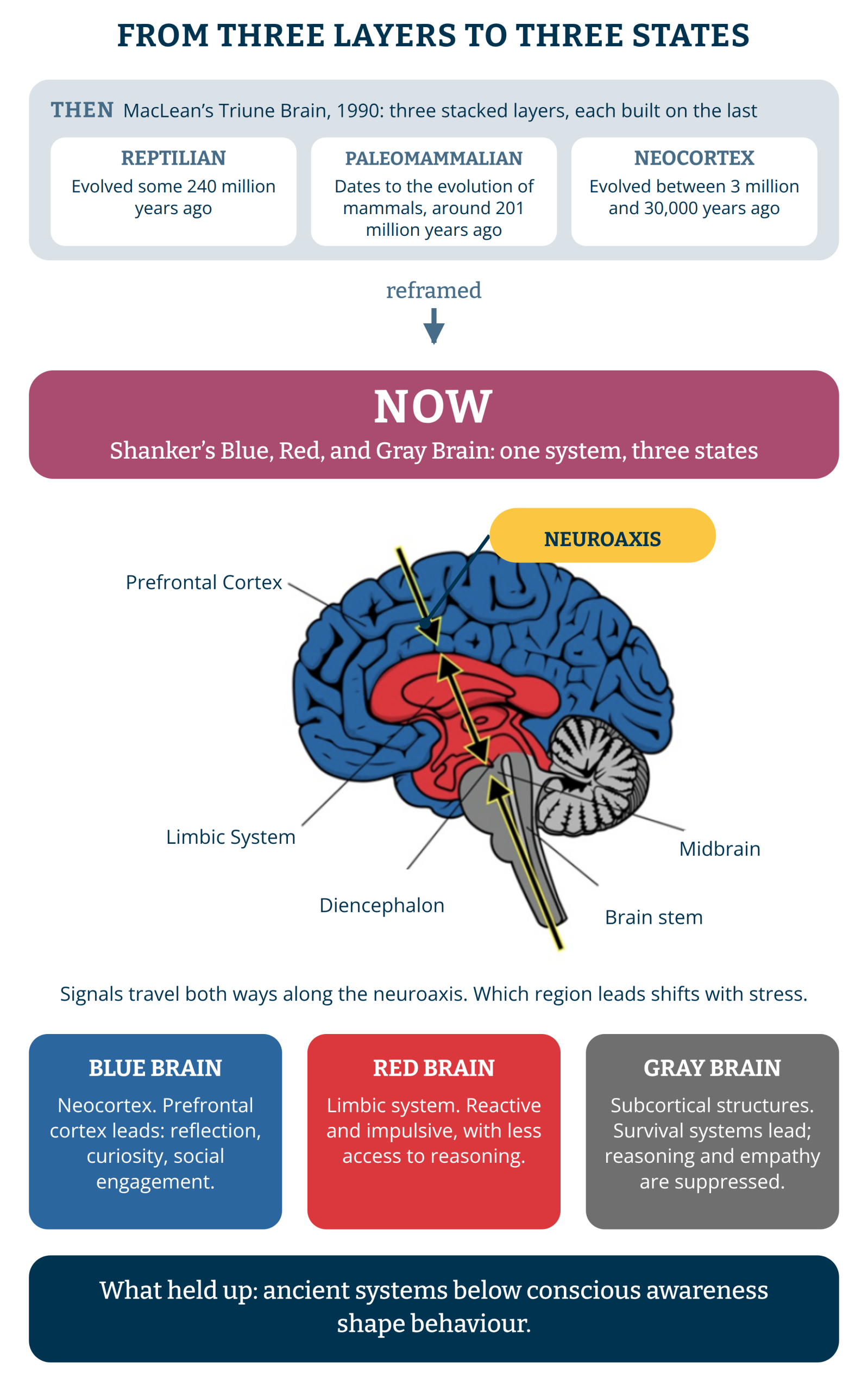
When we think about teachers, it’s easy to picture lesson plans, classroom management, and subject expertise. But what really sets a Self-Reg teacher apart isn’t just what they know—it’s how they show it in their daily practice. Whether it’s a Grade 12 physics teacher, a Grade 1 teacher, or an early childhood educator, Self-Reg teachers “walk their talk.” They model calm and compassion, even in difficult moments or when perspectives differ. They understand that stress is part of being human and that even with years of training, “red-brain moments” happen. What makes the difference is recognizing them for what they are and recovering with grace.
A hallmark of Self-Reg teachers is what Susan Hopkins calls “soft eyes.” They look at children, colleagues, parents, and even themselves with curiosity and compassion, trying to see from the inside what might really be going on. This science-informed perspective shifts the focus from control to understanding. To dive deeper into what this looks like in practice, check out the 6×6 series video on teachers below: