
STUART SHANKER
Founder & Visionary, The MEHRIT Centre

Dr. Stuart Shanker
Founder & Visionary, The MEHRIT Centre
Stuart Shanker's Bio
Stuart Shanker (D.Phil) is a Distinguished Research Professor Emeritus of Philosophy and Psychology, the Founder & Visionary of The MEHRIT Centre, Ltd., and Self-Reg Global Inc. One of his many books, “Calm, Alert and Learning: Classroom Strategies for Self-Regulation (2012)”, is a top-selling educational publication in Canada. Self-Reg: How to Help Your Child (and You) Break the Stress Cycle and Successfully Engage With Life (2016), has garnered enthusiastic reviews and media attention throughout North America and has also been published in the United Kingdom, the United States, Poland, Germany, China, South Korea, Japan, the Netherlands, Georgia and the Czech Republic. His latest books are Self-Reg Schools: A Handbook for Educators (2019) and Reframed: Self-Reg for a Just Society (2020)
Over the past decade, Stuart has served as an advisor on early child development to government organizations across Canada and the United States, and in countries around the world. During this period, he became increasingly interested in the impact of excessive stress on child development and behaviour. Stuart’s five-step Self-Reg model, The Shanker Method®, is a powerful process for understanding and managing stress in children, youth and adults.
In 2012 Stuart founded The MEHRIT Centre as a Self-Reg learning and information centre. Stuart commits considerable time to bringing the research and science of Self-Reg to parents, early childhood educators, teachers, educational leaders, health practitioners and communities through presentations, master classes, online courses, webinars, publications, social media and blogs.
Stuart Shanker's Journey to Self-Reg
Dr. Stuart Shanker is a Distinguished Research Professor Emeritus of Philosophy and Psychology from York University, in Toronto, Canada and the Founder & Visionary of the MEHRIT Centre, Ltd. He is best known as one of the world’s leading authorities on self-regulation and child development.
An internationally acclaimed speaker, educator and author, Dr. Shanker has written many influential books and articles including, Self-Reg Schools: A Handbook for Educators co-authored with Susan Hopkins and Reframed: Self-Reg for a Just Society where he explores self-regulation in wider, social terms. Whereas his two previous books, Calm, Alert, and Learning and Self-Reg, were written for educators and parents, Reframed, the final book in the trilogy, unpacks the unique science and conceptual practices that are the very lifeblood of Self-Reg.
In 1975, Dr. Shanker, who had studied English literature at the University of Toronto, received a scholarship to study Philosophy, Politics and Economics at Oxford. At Oxford he won the Marian Buck Fellowship at Christ Church, where he received his B Phil in philosophy and his D Phil in the philosophy of mathematics. During his post-doctoral fellowship at Oxford he studied Wittgenstein’s critique of Alan Turing’s mechanistic theory of learning, which resulted in his 1998 book Wittgenstein’s Remarks on the Foundations of AI. During this period Dr. Shanker became highly interested in child development, which he studied under the eminent developmental psychologist, Jerome Bruner. This led to a burgeoning interest in the the role that emotion and social engagement play in language development. Shortly after Dr. Shanker accepted a position at York University, in 1986, he was cross-appointed in both the philosophy and psychology departments, which allowed him to pursue his interests in child development.
During the 1990s Dr. Shanker worked and collaborated with many prominent academics, scientists and clinicians, including the anthropologist Barbara King, the primatologist Sue Savage-Rumbaugh, and the linguist Talbot Taylor. In 1998 Dr. Shanker began an intensive training in child psychotherapy under the late Stanley Greenspan. He went on to write the award-winning The First Idea with Greenspan (2004).
In 2005 Dr. Shanker received a $7 million grant from the Milton and Ethel Harris Foundation to establish a state-of-the-art cognitive and social neuroscience centre at York University. From 2007 – 2012 he served as director of the Milton and Ethel Harris Research Initiative (MEHRI), which undertook a major study of an adapted version of DIR therapy for children on the autism spectrum. This study showed that the MEHRI version of DIR, called MEHRIT, greatly increased the children’s capacity to share and initiate joint attention and reciprocal interaction with their parents, and to develop important functional language skills.
In 2007, Dr. Shanker became the first President of the Canadian Council of Early Child Development. He worked closely with J. Fraser Mustard for the next two years and the two of them, together with Margaret McCain, published Early Years Study II in 2007.
Along with his work as a professor at York University, Dr. Shanker has served as an advisor on early child development to government organizations across Canada and the US and countries around the world, including. Australia, Bosnia, Colombia, England, Hungary, Ireland, Mexico, New Zealand, Northern Ireland, Peru, Romania, and Serbia. Most recently he served as the 2012 Thinker in Residence for Western Australia, and then returned two years later to follow up on the work that had been initiated during his tenure in Perth. He also served as Director of the Council of Human Development for ten years, an interdisciplinary dynamic systems think tank; and as the Director of the Canada-Cuba Research Alliance for six years.
Throughout his career, Dr. Shanker has studied the role of self-regulation in mental and physical wellbeing. He has focused on the beneficial role that stress plays in children’s development and learning and the worrying effects of excessive stress. Over the past five years he developed Shanker Self-Reg®, his five-domain model for understanding, recognizing and alleviating the negative impact of excessive stress. In 2012 he founded The MEHRIT Centre to promote and teach the practice of Self-Reg on a broader scale to teachers and parents. In 2016 he founded The Self-Regulation Institute (SRI) with its mission to enhance the health and wellbeing of children, youth, adults, and communities through integrative research steered by the innovative Self-Reg model. In 2020 he founded Self-Reg Global Inc. to establish Self-Reg on an international level, facilitating the development of Self-Reg initiatives around the world.
Degrees & Awards
Degrees
D.Phil., Oxford
B.Phil., Oxford. First Class
M.A., English Literature, University of Toronto. First Class
B.A., Philosophy, Politics, and Economics, Oxford. First Class
B.A., English Literature, University of Toronto. First Class
Awards
Canada Council Doctoral Fellowship and Postdoctoral Fellowship
Calgary Institute for the Humanities Fellowship
University of Alberta Mactaggart Fellowship
Izaak Walton Killam Fellowship at the University of Alberta
Walter L Gordon Fellowship at York University
Publications
Reframed: Self-Reg for a Just Society (2020)
Self-Reg Schools: A Handbook for Educators co-authored with Susan Hopkins (2019)
Self-Reg: How to Help Your Child (And You) Break the Stress Cycle and Successfully Engage with Life (2016), with Teresa Barker
Calm, Alert, and Learning: Classroom Strategies for Self-Regulation (2012)
Early Years Study 2: Putting Science into Action (2007), with Fraser Mustard and Margaret Norrie McCain
Human Development in the 21st Century (2007), with Alan Fogel and Barbara J. King
The First Idea: How Symbols, language and intelligence evolved from our primate ancestors to modern humans. (2004), with Stanley Greenspan.
Selected Writings
Books
Shanker, S. (2020) Reframed: Self-Reg for a Just Society University of Toronto Press
Hopkins S., & Shanker, S, (2019) Self-Reg Schools A Handbook for Educators Toronto: Pearson Education Canada.
Shanker, S., Barker, T. (2016) Self-Reg: How To Help Your Child (And You) Break The Stress Cycle and Successfully Engage With Life. Penguin Random House Canada (foreign editions German, Korean, Polish, Czech, Japanese, Chinese, UK, USA)
Shanker, S. (2012). Calm, Alert, and Learning: Classroom strategies for self-regulation. Toronto: Pearson Education Canada.
Fogel, A., King, B. J., & Shanker, S. (Eds.) (2008). Human Development in the Twenty-First Century: Visionary ideas from systems scientists. Cambridge, UK: Cambridge University Press.
Greenspan, S. & Shanker, S. (2004). The First Idea: How symbols, language, and intelligence evolved from our primate ancestors to modern humans. Boston: DaCapo Press.
Greenspan, S. & Shanker, S. (2002). Toward a Psychology of Global Interdependency: A Framework for International Collaboration. Washington: ICDL Press.
Chapters
Shanker, S. & Hopkins, S. (2017). On becoming a self-reg haven. In W. Steele (Ed.), Optimizing learning outcomes: Proven brain-centric, trauma-sensitive practices. (pp. 30-57). New York: Routledge.
Shanker, S. & Casenhiser, D. (2013). Reducing the effort in effortful control. In T. Racine & K. Slaney (Eds), A Wittgensteinian perspective on the use of conceptual analysis in psychology (pp. 214-232). New York: Palmgrove Macmillan.
Shanker, S. (2012). Emotion regulation through the ages. In A. Foolen, U. M. Ludtke, T. P. Racine, & J. Zlatev, Moving ourselves, moving others (pp. 105-138). Amsterdam: John Benjamins.
Shanker, S. & Downer, R. (2012). Enhancing the potential in children (EPIC). In L. Miller & D. Hevey (Eds), Policy issues in the early years (pp. 61-76). London: Sage.
Greenspan, S. & Shanker, S. (2006). A developmental framework for depth psychology and a definition of healthy emotion functioning. In PDM Taskforce, Psychodynamic diagnostic manual (pp. 431-482). Silver Spring, MD: Alliance of Psychoanalytic Organizations.
Greenspan, S. I. & Shanker, S. (2005). Developmental research. In E. S. Person, A. M. Cooper, & G. O. Gabbard (Eds), The American Psychiatric Publishing textbook of psychoanalysis (pp. 335-360). Arlington, VA: American Psychiatric Publishing.
Psychology Today
Looking at ADHD With a Self-Reg Lens
Self-Reg: The Nature of Stress
Self-Reg: Self-Regulation vs. Self Control
“Lumos Solem” Breaking Free from a Stress Cycle
Reframing Temperament “Difficult” vs “Stressed”
Self-Reg and Holiday Stress: Restoring the Balance
Why is my Child so Mentally Lazy?
Journal Articles
See all of Stuart’s Publications Here
Shanker, S. (2018). Reframing High Math Anxiety: Avoiding the Perils of a Victorian Paradigm: Stemming the Divide. Reframe: The Journal of Self-Reg, 1(1), 1-18.
Hopkins, S., Shanker, S. & Leslie, R. (2017). Self-regulation, self-control, and the practice of Shanker Self-Reg. Reframe: The Journal of Self-Reg, 1(1), 58-75.
Burman, J. T., Green, C. D. & Shanker, S. (2015), On the meanings of self-regulation: Digital humanities in service of conceptual clarity. Child Development. doi: 10.1111/cdev.12395
Casenhiser, D., Binns, A., McGill, F., Morderer, O. & Shanker, S. (2014). Measuring and supporting language function for children with autism: Evidence from a randomized control trial of a social-interaction-based therapy, Journal of Autism and Developmental Disorders, 45(3). DOI:10.1007/s10803-014-2242-3 ·
García Domínguez, L., Stieben, J. · Pérez Velázquez, L. ·Shanker, S. (2013). The imaginary part of coherency in autism: Differences in cortical functional connectivity in preschool children. PLoS ONE 10/2013; 8(10):e75941. DOI:10.1371/journal.pone.0075941 ·
Casenhiser, D., Shanker, S. & Stieben, J. (2011). Learning through interaction in children with autism: preliminary data from a social-communication-based Intervention. Autism, 17(2). DOI:10.1177/1362361311422052
Shanker, S.G. (2008). In search of the pathways that lead to mentally healthy children. Journal of Developmental Processes, 3(1),22-33.
Greenspan, S. I., Brazelton, T. B., Cordero, J., Solomon, R., Bauman, M. L., Robinson, R., Shanker, S., & Breinbauer, C. (2008). Guidelines for early identification, screening, and clinical management of children with Autism Spectrum Disorders. Pediatrics, 121(4), 823-830. doi:10.1542/peds.2007-3833
Greenspan, S. & Shanker, S. (2007). The developmental pathways leading to pattern recognition, joint attention, language and cognition. New Ideas in Psychology, 25(2), 128-142. doi: 10.1016/j.newideapsych.2007.02.007
Shanker, S. (2004). Autism and the Dynamic Developmental Model of Emotions. Philosophy, Psychiatry, & Psychology 11(3), 219-233. The Johns Hopkins University Press.
Reports
Shanker, S. (2010). Foreword, Growing Miracles: The first six years with your child (2nd ed). Alberta Health Services.
Shanker, S. (2009). Foreword, Every Child Every Opportunity: Curriculum and Pedagogy for the Early Learning Program, Province of Ontario.
McCain, M. N., Mustard, J. F., & Shanker, S. (2007). Early years study 2: Putting science into action. Toronto: Council for Early Child Development.
Cordero, J., Greenspan, S. I., Bauman, M. L., Brazelton, T. B., Dawson, G., Dunbar, B., Mundy, P. C., Perou, R., Scott, K. G.,Shanker, S.G., & Stein, R. E. K. (2006). CDC/ICDL collaboration report on a framework for early identification and preventative intervention of emotional and developmental challenges. Atlanta: Centers for Disease Control.
Greenspan, S. I. & Shanker, S. (2005). Developmental research. In E. S. Person, A. M. Cooper, & G. O. Gabbard (Eds), The American Psychiatric Publishing textbook of psychoanalysis (pp. 335-360). Arlington, VA: American Psychiatric Publishing.
Contact Info
Media Inquiries: media@self-reg.ca
General Self-Reg Inquiries: info@self-reg.ca
Canadian Presentation Inquiries: info@self-reg.ca
International Presentation Inquiries: info@selfregglobal.com

SELF-REG IN THE MEDIA
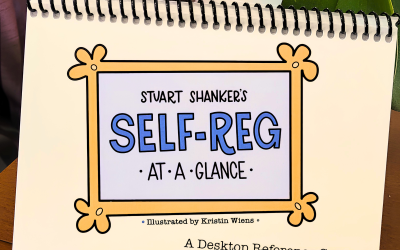
Introducing Self-Reg at a Glance: A Desktop Reference Guide
Sometimes, in the middle of a busy day, we don’t need more information. We need something that helps us reconnect with what we already know. We’re excited to introduce Stuart Shanker’s Self-Reg at a Glance: A Desktop Reference Guide, a handy flip-book that brings...
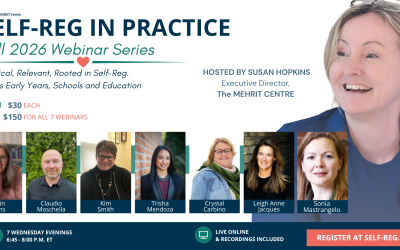
Self-Reg in Practice: Join Us for Our Fall 2026 Webinar Series
What does Self-Reg look like when we bring it into the real, wonderfully complicated moments of our work with children, youth and one another? This fall, The MEHRIT Centre is bringing together members of our presentation team for Self-Reg in Practice, a seven-part...

Where Did the Empathy Go?
Blog written by Elisabeth Han a Self-Reg Full Foundations Certificate Program and Self-Reg Learning Facilitator’s Program alumni Bullying causes real harm. Children who are bullied need safety, protection, and support. Harmful behaviour cannot simply be ignored or...

Join Us for the Soft Eyes Journal Club
We’re getting ready for the Soft Eyes Journal Club, and we’ve created a free companion space to help you follow along with us from September through December Join Susan Hopkins and Kristin Wiens live on Facebook every Monday at 7 p.m. Eastern as we spend some time...

Self-Reg Course Calendars 2026-2027
Explore our Self-Reg Course Calendars 2026–2027 to see upcoming facilitated programs and start dates. Looking to plan ahead for the rest of 2026? Dive deeper into our facilited courses here

What Is The Real Problem? A Wonder That Reframed Behaviour.
For a couple of weeks in the summer, I am a site lead and coordinator for our Board Summer Camp. Just as I started going into classrooms today today to partake in some of the summer learning, I received a message from one of the instructors. She mentioned that a...

Why Small Things Trigger Big Reactions
Featured Image: Downloadable graphic by Kristin Wiens which is included in the book Soft Eyes: Daily Reflections on Stress, Energy, and Restoring Resilience: Sept - Dec 2026 by Susan Hopkins (Author), Kristin Wiens (Author, Illustrator). A child's outsized reaction to...

How Do We Move Beyond Five Moore Minutes? A Self-Reg Look At UDL.
This summer, I am co-facilitating a Book Club on the book, One Without The Other. As I shared in this Instagram post, my position for next year has me especially interested in UDL (Universal Design For Learning). As many know, I read far less professional reads than...

Soft Eyes: A Daily Self-Reg Journal for Stress and Resilience
Soft Eyes was created by Susan Hopkins and illustrated by Kristin Wiens, grounded in Stuart Shanker's Self-Reg framework. It is a 122-day journal of daily reflections on stress, energy, and resilience, and it is the newest book from The MEHRIT Centre. You can purchase...

Where Did Yesterday’s Child Go?
A Self-Reg Science Byte Featured Image: Illustration by Kirsten Wiens, from Applied Self-Reg for Education Systems (Wiens & Hopkins, 2025), available through the Self-Reg Shop. Why children can seem like completely different people from one day to the next....

Screen-Time Meltdowns
The WiFi gets shut off in the middle of a game. Within seconds, a child who seemed perfectly calm is yelling, throwing the controller, or slamming a door. The adult is left wondering what just happened. Two minutes ago, everything seemed fine. Now the whole evening...

What I Learned About Co-Regulation When the Wi-Fi Went Down
Written by Jamie Barker, Operations & Executive Coordinator at The MEHRIT Centre. Jamie recently celebrated nine years with the organization and was reminded once again at SRSS 2026 of the power of co-regulation. One of my favourite moments from the 2026 Self-Reg...
SELF-REG IN THE MEDIA
2020 – REFRAMED by Dr. Stuart Shanker Book Launch
2019 – Self-Reg Europe® Trademark Granted
2019 – Self-Reg Schools: Handbook for Educators by Stuart Shanker & Susan Hopkins Book Launch
2017 – The Shanker Method® Trademark Granted
2017 – Shanker Self-Reg® Trademark Granted
2017 – Self-Reg by Dr. Stuart Shanker Paperback Book Launch
2016 – Self-Reg by Dr. Stuart Shanker Book Launch