
Restoring means supporting the recovery and replenishment needed to return toward balance, not only physiologically, but psychologically, socially, and spiritually.
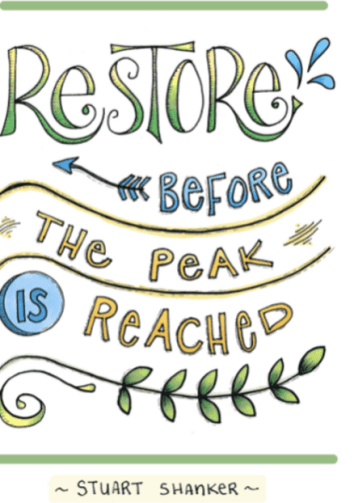
Restore is the fifth step of Self-Reg and the goal toward which the other steps lead.
Stuart describes restoration broadly: physiologically, psychologically, socially, and spiritually.
It is not simply stopping an activity, distracting ourselves, or temporarily lowering tension.
Genuine restoration involves recovery and replenishment, allowing depleted resources to rebuild and the brain-body system to move toward balance.
This distinction matters because some ways of coping provide immediate relief while adding stress over time.
The Self-Reg shift is from asking “What makes the stress feel better right now?” to discovering what actually restores energy, supports recovery, and strengthens our capacity to meet future stress without becoming progressively depleted.
Not everything that feels good is restorative. Scrolling for an hour, pushing through with caffeine, withdrawing from everyone, or other familiar ways of coping may provide short-term relief without rebuilding depleted resources. Restoration asks a deeper question: What genuinely gives energy back?
For one person it may be sleep, movement, music, nature, solitude, play, creative work, spiritual practice, or time with someone with whom they feel completely at ease. For another, some of those same things may be draining.
Learning what truly restores us matters because without adequate recovery, stress accumulates. Restoration is not a reward after everything else is finished. It is part of how the brain-body system remains able to meet stress.
True restoration does more than relieve tension; it rebuilds the energy and resources stress has consumed.
Hear Stuart explore resilience through the relationship among stress, energy, recovery, and restoration.
Explore what drains and restores your own energy and begin recognizing your individual patterns.
Take a deeper journey into restoration through Stuart’s current work on stress, energy, and resilience.