
Reframing means learning to distinguish between misbehaviour and stress behaviour and recognizing the signs of each. It shifts our attention from the behaviour alone to what may be happening beneath it.
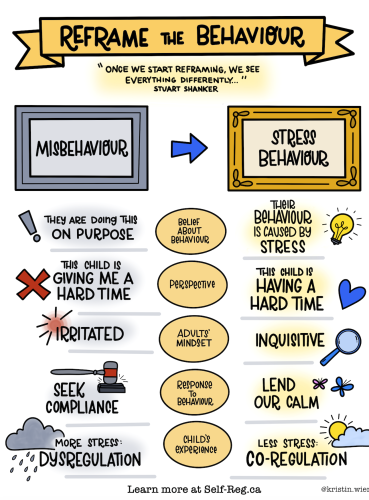
Reframe, the first step of Self-Reg, means learning to distinguish between misbehaviour and stress behaviour and recognize the signs of each.
Behaviour is our doorway into understanding what may be happening beneath the surface. Instead of immediately interpreting challenging behaviour as defiance, laziness, manipulation, or lack of motivation, we become curious about stress and state.
Reframing does not mean eliminating expectations, excusing harmful actions, or assuming that misbehaviour never occurs.
It means making sure we understand what we are responding to.
The Self-Reg shift begins with different questions:
Reframing can begin with a very small change in language. Instead of “Why won't she?”, we might wonder “Why can't she right now?” Instead of immediately seeing laziness, defiance, rudeness, attention-seeking, or lack of motivation, we become curious about stress.
That small shift can change our tone, body language, questions, and what we do next. Reframing does not mean lowering expectations or excusing harmful behaviour.
If the behaviour is stress-driven, adding pressure or consequences may intensify the very stress contributing to it. Understanding what we're seeing gives us a better chance of responding effectively.
Reframing begins when we become curious about stress instead of judging behaviour at the surface.
Hear Stuart explain what changes when we become curious about stress rather than stopping at the behaviour we see.
Learn how Reframe opens the door to understanding what may be driving behaviour.
Explore the deeper reframe at the heart of Stuart’s current Self-Reg thinking.