From Susan Hopkins, EdD | Executive Director
This reflection was originally published in The MEHRIT Centre newsletter. Sign up for our newsletter to receive Susan’s latest reflections, Self-Reg insights, and updates directly in your inbox.
On listening without registering a word
A few days ago, I was talking with someone and would have sworn I was listening. Later, I asked them a question. They looked at me kind of funny. “I already told you that.”
They had.
I had absolutely no memory of it. What interests me is how differently that same moment can feel when we’re on the other side of it.
Why and Why Now?
When I’m the one who misses something, I know the backstory. Maybe I slept badly, I’m worried, or my mind is pulled in three directions. I know I wasn’t deliberately ignoring anyone. When someone else does it, I don’t have access to any of that. I just know I told them.
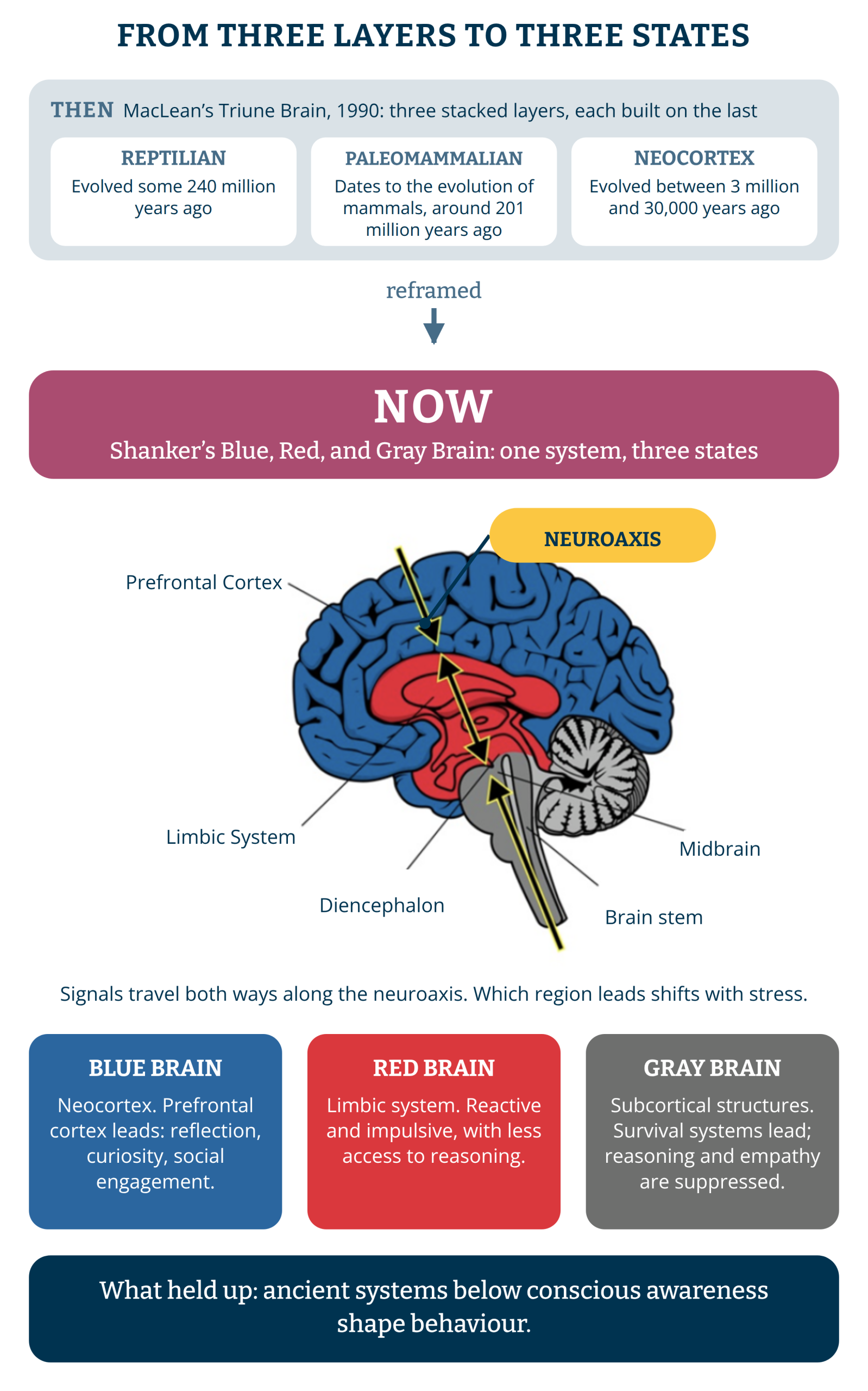
This is where Self-Reg gives us another possibility to consider. In Reframed 2.0, Stuart describes how a teen in Red Brain can become more attuned to our affect cues—our tone of voice, eye gaze, facial expression, and body language—than to the meaning of the words we’re saying.
That doesn’t mean stress explains every missed message. It does mean there may be more going on than “You weren’t listening to me.”
Then other Stressors (Emotion and Prosocial) join the experience
Here’s the part I find especially interesting. The moment I decide you weren’t listening, my own response can change. I become irritated. My voice gets sharper. My face changes. Those affect cues are now part of what you are receiving from me, and if you’re already stressed, I may have just added more stress to the interaction.
Sometimes someone genuinely wasn’t listening. Sometimes they forgot, misunderstood, disagreed, or were distracted. Self-Reg gives us another question to ask before deciding we know what someone else’s behaviour means.
The next time “I told you that” is on the tip of my tongue, I want to remember that I already know I said it. The more interesting question may be: What was happening for the other person when I was talking, and what is my response about to add?
If you haven’t read Stuart Shanker’s Reframed 2.0, I hope you will. After years immersed in Self-Reg, it still changed the way I understand myself, other people, and the world around me. I think it may change the way you see some very ordinary moments too.